
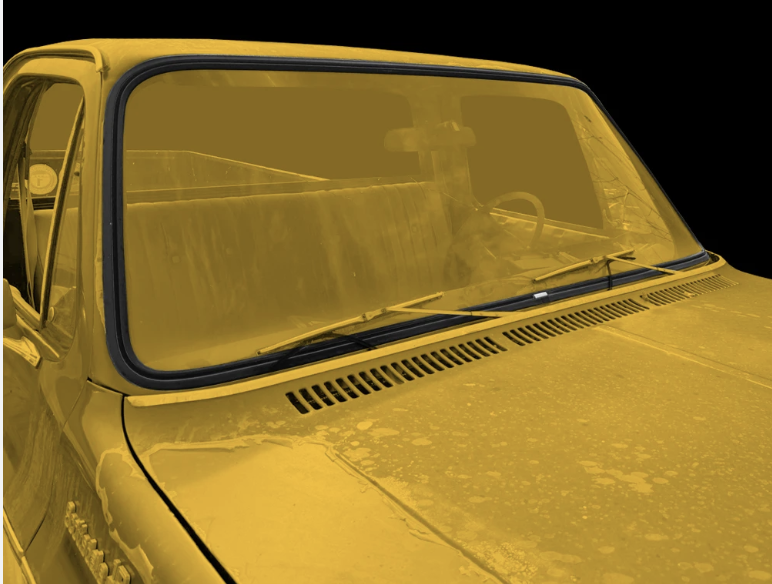
Windshields and other automotive glass are attached to vehicle bodies in two fundamentally different ways: bonded with urethane adhesive, or fitted into rubber gaskets. Each system has distinct advantages and trade-offs, and vehicle makers choose between them based on safety, cost, serviceability, and design needs.
How urethane-bonded glass works:
Urethane bonding uses a structural adhesive to glue the glass directly to the vehicle’s body flange. Modern windshield installations typically require a primer, a bead of urethane adhesive, and a controlled cure time before the vehicle is driven. Because the windshield becomes part of the vehicle’s structure, it contributes to roof strength, rollover protection, and the proper deployment of airbags. Bonded glass also provides a tight seal against wind and water, reduces vibration and noise, and accommodates complex glass shapes and flush-mounted styling.
Vehicles that use urethane bonding:
- Modern passenger cars and crossovers: Almost all current passenger vehicles use bonded windshields to meet crash-safety and ADAS (advanced driver-assistance systems) requirements.
- Luxury and performance cars: These often have curved, frameless glass and need a flush, aerodynamic finish only achievable with bonding.
- Many SUVs and light trucks: Where rollover protection and structural stiffness are priorities.
Pros and cons of urethane bonding
- Pros: Structural stiffness and improved safety; better NVH (noise, vibration, harshness); superior water and wind sealing; compatible with ADAS sensors and camera mounts; cleaner flush appearance.
- Cons: Requires proper curing and often professional installation; ADAS recalibration may be needed after replacement; generally higher labor cost than gasket replacements.
How gasket-attached glass works Gasket systems use a rubber or synthetic elastomer frame that the glass fits into. The gasket is either retained by a channel in the body panel or pressed into place, allowing the glass to be removable. Some gaskets are simply snap-in; others use a secondary sealant but are not structural adhesives. Gasket systems were common historically and remain in use where ease of removal or cost savings are priorities.
Vehicles that use gaskets
- Older cars and classic vehicles: Many vintage models used gaskets, which are easier to replace without cutting or re-bonding.
- Commercial vehicles, buses, tractors, and some heavy-duty trucks: Often use gasket-mounted windows for easier field service and replacement.
- Vans, RVs, and specialty vehicles: Removable or replaceable panels (vents, small side windows) commonly use gaskets.
- Some inexpensive or economy vehicles may use gasket-mounted back or side glass.
Pros and cons of gaskets
- Pros: Easier, faster, and often cheaper to replace; field-serviceable with minimal tools; less concern about adhesive cure time or specialized installers.
- Cons: Typically, they are not structural, so they don’t contribute to crash stiffness. They can also be noisier or less watertight over time as gaskets age, be limited to simpler glass shapes and often visible trims and may not be suitable where ADAS cameras must be precisely mounted.
Why manufacturers choose one over the other Safety regulations and vehicle architecture drive the widespread adoption of bonded glass in modern passenger vehicles: bonding improves roof crush resistance and is integral to airbag performance. Styling and aerodynamic goals also favor bonded, flush-fit glass. Conversely, vehicles that prioritize serviceability, low replacement cost, or modular design favor gasket systems, especially where structural bonding is unnecessary or impractical.
Bottom line, urethane-bonded glass is the norm for contemporary passenger cars because it enhances safety, sealing, and fit-and-finish, while gasket-mounted glass remains valuable for applications where removability, simplicity, and cost are primary concerns. Choosing between them depends on vehicle purpose, safety requirements, and maintenance considerations.