
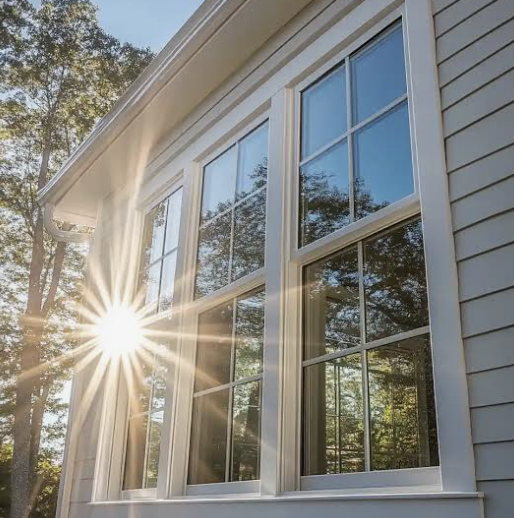
Choosing the right windows for a residential or commercial building affects energy bills, comfort, noise reduction, and curb appeal. This guide explains common window types you’ll encounter and takes a deeper look at single-pane, double-pane, and triple-pane Low-E (low-emissivity) windows—what they are, how they perform, and which situations they suit best.
Common Window Types for Residential and Commercial Buildings
- Single-hung and double-hung windows: Popular in homes and some low-rise commercial spaces. Single-hung windows have a fixed upper sash and a movable lower sash; double-hung windows let both sashes move for better ventilation and easier cleaning.
- Casement windows: Hinged at the side and opened with a crank, casements provide tight seals and excellent ventilation. They’re common in both residences and offices where airflow and unobstructed views are desired.
- Sliding (gliding) windows: Move horizontally and are space-efficient. Sliding windows are common in modern apartments, storefronts, and commercial façades.
- Awning windows: Hinged at the top and open outward. Often used with fixed picture windows for ventilation without letting rain in.
- Fixed/picture windows: Non-operable windows that maximize light and views. Frequently used in commercial lobbies, retail storefronts, and living rooms.
- Specialty and skylight windows: Includes arch-top, bay, bow, and skylights—used for architectural interest, daylighting, and creating focal points in both residential and commercial projects.
- Storefront and curtainwall glazing: Large, continuous glass systems for commercial buildings. These prioritize aesthetics and daylighting; thermal performance depends on the selected glazing units and framing systems.
Understanding Glazing Types: Single-Pane, Double-Pane, Triple-Pane, and Low-E Coatings The glazing configuration—how many glass layers and what coatings or gases are used—determines a window’s thermal, acoustic, and solar performance.
Single-Pane Windows
- What they are: A single layer of glass with no insulating airspace or special coatings.
- Performance: Lowest thermal resistance (R-value) and poorest sound reduction. Single-pane windows allow fast heat transfer, making them inefficient in climates with large temperature differences.
- When used: Older homes, historic buildings, or very mild climates. Some commercial spaces with budget constraints or where preserving original aesthetics matters still use single-pane glazing.
- Pros and cons: Pros — low upfront cost and simple replacement. Cons — high energy loss, condensation risk, and poor noise control. They generally do not meet modern energy codes for new construction.
Double-Pane Windows (Insulated Glass Units — IGUs)
- What they are: Two parallel glass panes separated by an air or gas-filled spacer, sealed to form an insulated unit.
- Performance: Significantly better thermal and acoustic performance than single-pane windows. Filling the gap with inert gas (argon or krypton) improves insulation. Proper spacers and sealing reduce condensation and increase longevity.
- When used: Widely used in both residential and commercial projects as the standard energy-efficient choice, suitable for most climates.
- Pros and cons: Pros — cost-effective, improved comfort, reduced heating and cooling costs, and better sound reduction. Cons — while efficient, they’re less insulating than triple-pane options and can still transmit more solar heat gain without coatings.
Triple-Pane Windows and Low-E Coatings
- What they are: Three glass panes creating two insulating air/gas spaces; often combined with Low-E coatings—ultra-thin metallic layers that reflect infrared heat while allowing visible light through.
- Performance: Highest thermal performance among common configurations. Triple-pane Low-E windows minimize heat loss in winter and heat gain in summer, dramatically reducing heating and cooling loads. They also provide superior sound insulation and reduce condensation.
- When used: Cold climates, high-performance buildings (passive houses, net-zero projects), and commercial spaces prioritizing occupant comfort and energy savings.
- Pros and cons: Pros — excellent energy efficiency, comfort, and noise control; can improve HVAC sizing and lower operating costs. Cons — higher upfront cost and added weight (may require stronger frames and different installation practices). For many projects, the long-term energy savings offset the initial expense.
Choosing the Right Window for Your Building
- Climate matters: In cold climates, prioritize triple-pane Low-E windows. In temperate regions, double-pane Low-E with argon may be the most cost-effective choice.
- Building type and use: Commercial storefronts may emphasize large glass areas with double- or triple-pane laminated glass for safety and performance. Residential projects balance cost, comfort, and aesthetics.
- Budget vs. lifecycle costs: Higher-efficiency windows cost more initially but lower utility bills and increase occupant comfort and property value.
- Additional features: Consider Low-E coatings, gas fills, warm-edge spacers, and quality installation to maximize performance.
Conclusion Understanding the differences between single-pane, double-pane, and triple-pane Low-E windows helps you choose the best glazing for energy efficiency, comfort, and budget. For most modern residential and commercial projects, double-pane Low-E glazing is the standard baseline; triple-pane Low-E is ideal for high-performance needs, and single-pane remains only for specific restoration or low-demand scenarios. Selecting the right window, combined with professional installation, delivers lasting benefits in energy savings and occupant comfort.