
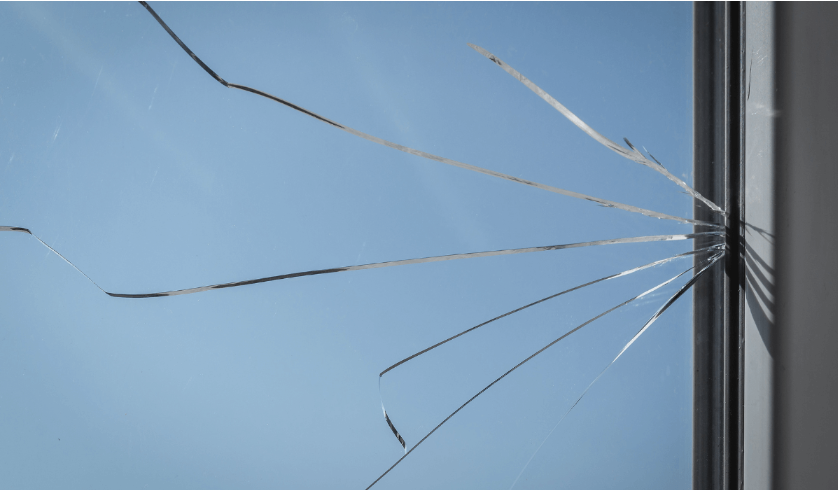
While glass is generally solid and stable, it’s actually quite sensitive to how quickly it heats up or cools down. When temperature changes are uneven or abrupt, internal stresses can build until the glass can’t hold them anymore, leading to cracks or sudden breakage. Here’s how harsh temperatures cause glass to fail, and what you can do to prevent it.
Like most materials, glass expands when heated and contracts when cooled. This movement is small but significant. If one area of a pane warms faster than another-say, a sunlit patch next to a shaded edge—the hotter zone wants to expand while the cooler zone resists, creating tension inside the glass. If the stress exceeds the strength of the glass (especially around weak points like edges or chips), cracks form. This is why you might see a crack start at the edge and sweep inward after a hot day followed by a cool evening.
Edge quality and installation matter as well. Glass edges are the most vulnerable; microchips, scratches, or poorly finished edges concentrate stress. Tight frames that pinch the glass, misaligned spacers, or hard contact points create “contact stress” that combines with thermal stress. These stress combinations can be the difference between being able to see through your glass and not.
Different glass types behave differently:
- Annealed glass (standard window glass) is the most prone to thermal stress cracking because it hasn’t been strengthened.
- Tempered glass is heat-treated to increase surface compression, making it four to five times stronger and far more resistant to thermal shock. It also breaks into small cubes rather than sharp shards.
- Heat-strengthened glass sits between annealed and tempered in strength; it’s often used where thermal loads are higher but full tempering isn’t required.
- Laminated glass sandwiches a plastic interlayer between sheets. It doesn’t resist thermal stress as well as tempered by itself, but it holds together if cracked and adds safety and sound control.
- Insulating glass units (double-pane or triple-pane) can experience internal pressure changes with temperature. If seals fail or spacers are uneven, temperature swings can stress one pane more than the other.
Sun, coatings, and shading Dark tints, reflective coatings, blinds, and decals can alter how heat is absorbed or trapped. For instance, a dark interior shade placed very close to the glass can create a hot inner surface while the perimeter stays cooler, raising thermal stress. Low-E coatings reflect infrared heat, which can reduce interior heat gain, but design and spacing must account for altered heat flow. Here’s some valuable examples on how to avoid glass breakage from thermal stresses.
- Avoid rapid temperature swings: don’t spray cold water on hot glass or direct space heaters at cold windows.
- Keep blinds or shades a few inches from the glass to let heat dissipate.
- Use tempered or heat-strengthened glass in high-sun, large-span, or near-heat-source locations.
- Ensure proper installation: smooth, polished edges; correct clearances; quality setting blocks and gaskets.
- Inspect and maintain seals on insulating units; replace fogged or failed panes promptly.
- Clean with moderate-temperature water and avoid abrasive tools that can scratch stress-prone edges.
Understanding how temperature creates stress in glass helps you choose the right products and habits—so your windows, doors, and glass fixtures stay clear, safe, and intact, even when the weather isn’t.