
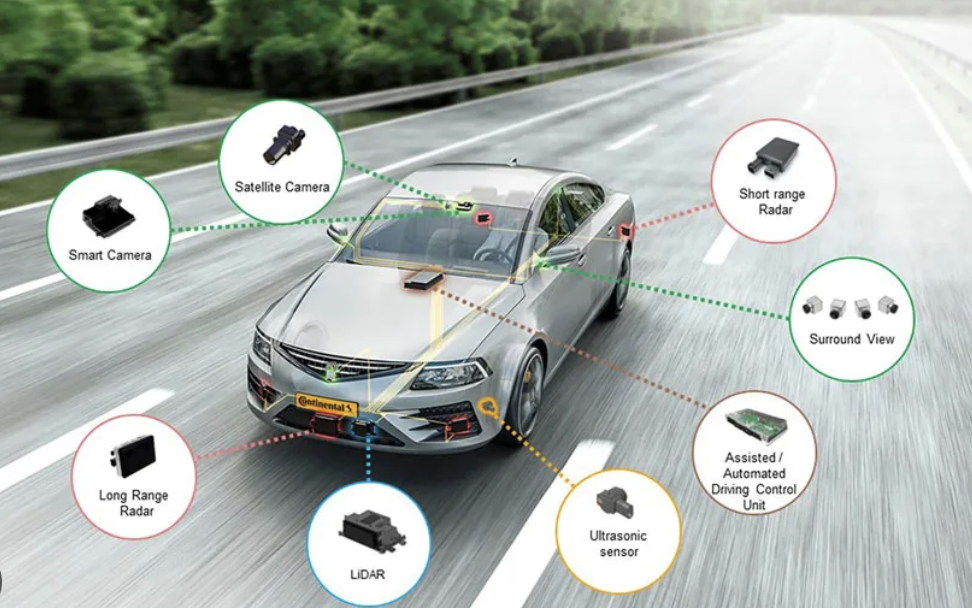
Advanced driver-assistance systems (ADAS) are now very common in new vehicles. Features such as automatic emergency braking (AEB), lane-departure warning, blind-spot monitoring, and rearview cameras can help drivers detect hazards and avoid crashes. They are not substitutes for attentive driving, but research suggests that some systems meaningfully reduce certain types of collisions.
A strong example is automatic emergency braking. A 2022 study by the Insurance Institute for Highway Safety (IIHS), comparing vehicles with and without front crash-prevention systems, found that forward-collision warning combined with automatic braking was associated with 50% fewer front-to-rear crashes and 56% fewer front-to-rear crashes with injuries. The results show the potential of AEB to respond when a driver does not brake in time. However, performance can depend on the system, vehicle, speed, weather, and whether it can detect the obstacle.
Rear automatic braking has also shown benefits. IIHS reported that vehicles with rear AEB had 78% fewer police-reported backing crashes than similar vehicles without it. Rearview cameras, required on new U.S. vehicles since 2018, help drivers see behind the vehicle, but they do not necessarily stop the car. Pairing cameras with sensors or automatic braking can provide an additional layer of protection.
Systems that help prevent lane-departure crashes can be useful, too. IIHS research found that lane-departure warning was associated with 11% fewer single-vehicle, head-on, and sideswipe crashes and 21% fewer such crashes involving injuries. Lane-keeping assistance may intervene as well, but these features vary widely: some only warn, while others apply steering input. Drivers should understand what their particular vehicle does and when it may not operate reliably.
Not every ADAS feature has equally strong evidence. Blind-spot monitoring can alert drivers to vehicles alongside them, and IIHS studies have found reductions in lane-change crashes. But alerts can be missed, and sensors may have difficulty in certain conditions. The effectiveness of any system also depends on correct use, maintenance, and driver understanding. Dirty or damaged sensors, heavy rain, snow, glare, faded lane markings, and unusual road layouts can limit performance.
There is another important caveat: fewer crashes of one type do not automatically mean fewer crashes overall. Drivers may rely too heavily on assistance, misunderstand its limits, or become distracted. The National Highway Traffic Safety Administration (NHTSA) emphasizes that drivers remain responsible for controlling their vehicles—even when assistance features are active. ADAS should be treated as a backup, not as permission to look away or disengage.
Overall, the evidence indicates that well-designed ADAS—especially automatic emergency braking—can reduce specific crashes and injuries. Their real-world value is greatest when drivers stay attentive, keep systems in working order, and learn how each feature behaves. When buying a vehicle, check which functions are standard, how they performed in independent evaluations, and whether the system provides a warning, actively intervenes, or both.