
From Sand to Safety: How Your Car’s Windshield is Made
We often take the windshield for granted, but that clear piece of glass is a marvel of modern engineering. It isn’t just “glass”; it is a sophisticated, multi-layered safety device designed to be incredibly strong and protect us from dangerously high winds, rogue pebbles, and the elements. Here is a look behind the curtain at the high-tech manufacturing process that turns simple raw minerals into your car’s most important window.
- The Recipe: Turning Raw Materials into Glass
It all begins with a specific mixture of raw materials known as batch. The primary ingredient is silica sand, which is combined with Soda ash to lower the melting point, Dolomite and limestone to improve durability, and Cullet (recycled glass) to make the process more sustainable and energy efficient.
These materials are blasted in a furnace at temperatures exceeding 1500°C, that’s over 2700ºF! Once it has become molten, the glass undergoes the “float” process, where it is poured onto a bed of molten tin. Because glass is less dense than tin, it floats on top, creating a perfectly flat, uniform sheet.
- Cutting and Shaping
Once the glass has cooled and passed through an annealing lehr (a controlled cooling kiln to prevent internal stress), it is cut into the specific dimensions required for the vehicle model.
However, a windshield isn’t flat. To get that aerodynamic curve, two identical sheets of glass are heated until they soften. They are then placed over a mold where gravity, or sometimes a mechanical press, bends them into the precise shape of the car’s frame.
- Lamination
This is where the magic happens. Unlike the side windows of your car, which are made of tempered glass (designed to shatter into tiny cubes), the windshield is made of laminated glass. Laminated glass has a thin, clear layer of Polyvinyl Butyral (PVB) which is sandwiched between the two shaped sheets of glass. Think of it like a high-tech transparent glue. This “sandwich” is then put through a series of rollers to squeeze out air bubbles and passed into an autoclave to sterilize.
- The Autoclave: Pressure Under Fire
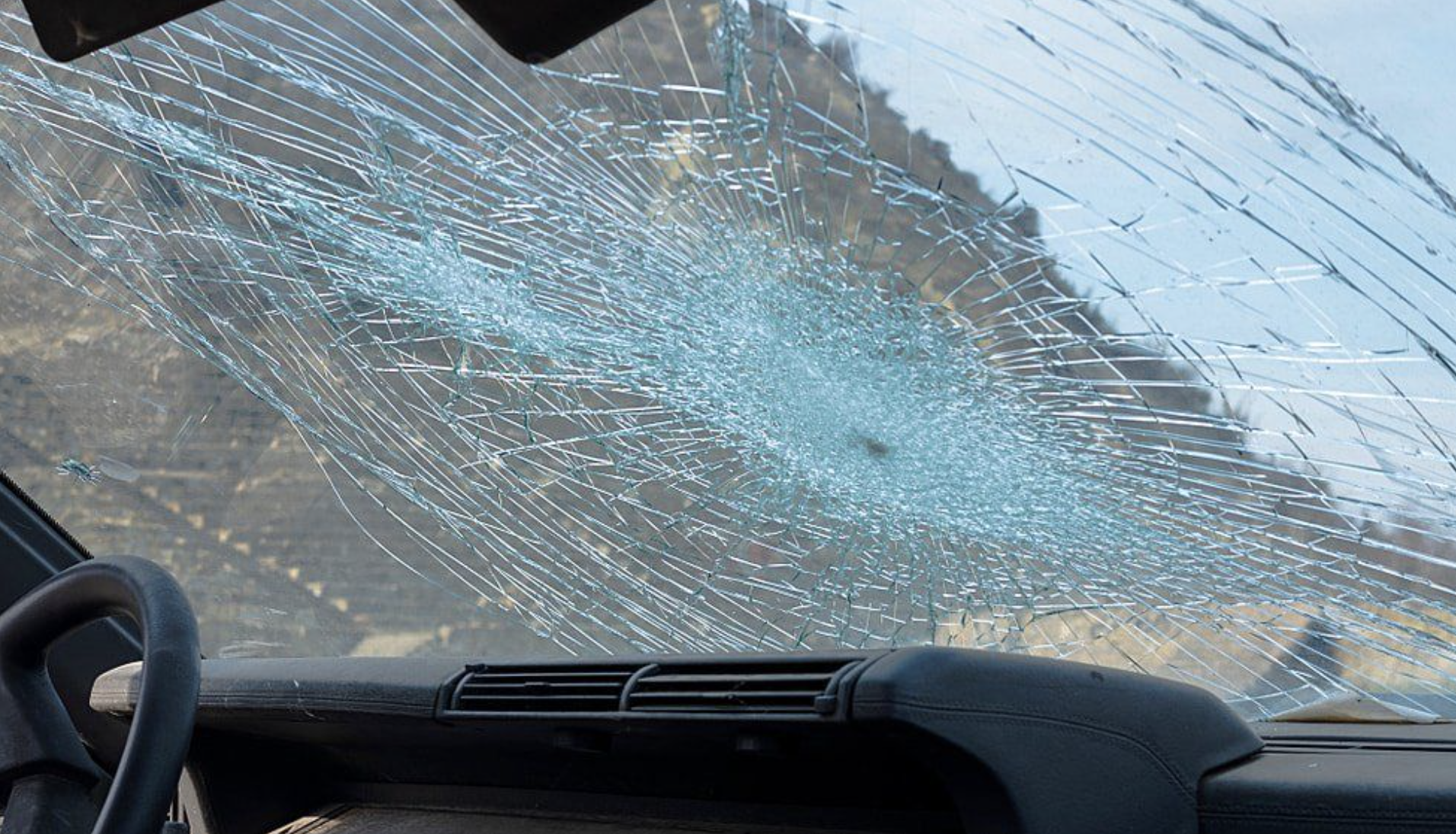
The autoclave is a giant pressure cooker. By applying specific heat and high pressure, the PVB layer chemically bonds to the glass. This process turns the milky, opaque plastic layer completely transparent, resulting in a composite material that is remarkably strong. If a rock hits your windshield, the glass may crack, but the PVB interlayer holds the shards in place, preventing them from flying into the cabin and maintaining the structural integrity of the roof.
- Final Touches and Tech Integration
Modern windshields do more than just block wind. Before the final assembly, manufacturers often add:
- The Frit: That black ceramic band around the edges that protects the adhesive from UV rays and provides a grippy surface for the glue.
- Sensors: Brackets for rain sensors and ADAS cameras.
- Heating Elements: Tiny, almost invisible wires for defrosting.
Every time you drive, you’re looking through a product that has been heated, bent, sandwiched, and pressurized to perfection. The next time a pebble pings off your glass, you can thank the complex chemistry and rigorous manufacturing that keeps that “chip” from becoming a catastrophe.