
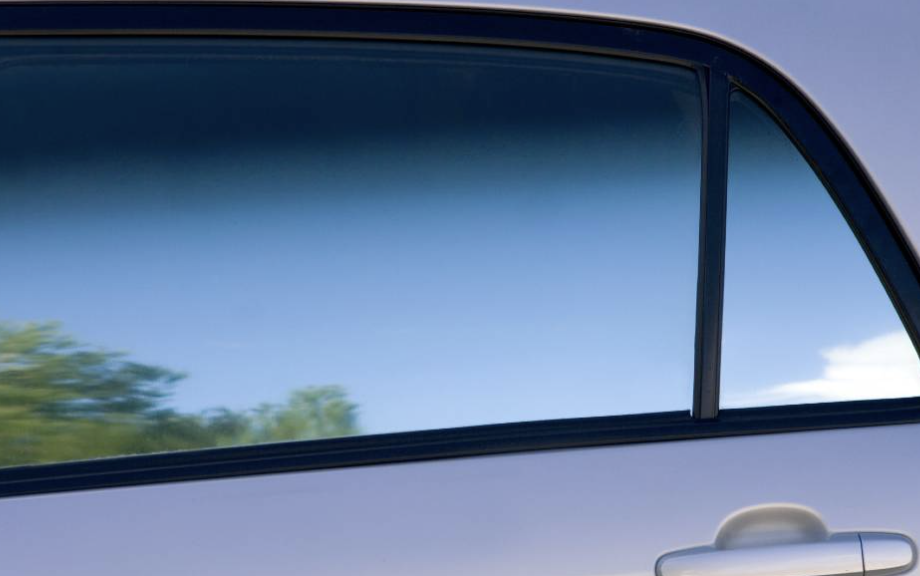
Metallized window tint is a type of solar-control film applied to glass to reduce heat, glare, and UV transmission. Unlike dyed films that rely on pigments, metallized tints use microscopic metal particles or thin metal layers to reflect and scatter sunlight, delivering excellent heat rejection and a reflective appearance. They’re commonly used on cars, commercial buildings, and residential windows.
How it’s made
- Base film: The core of the tint is a clear polyester (PET) film. Polyester is chosen for its strength, dimensional stability, and optical clarity.
- Metal deposition: Metal is applied to the polyester using vacuum metallization or sputter-coating. In vacuum metallization, metal (often aluminum, though nickel, silver, or alloys can be used) is heated in a vacuum until it vaporizes and then condenses as a very thin, uniform layer on the film surface. Sputtering is a more controlled process that dislodges metal atoms from a target to form an even finer layer. These methods produce ultra-thin metallic films measured in nanometers.
- Multi-layer structure: After metallization, additional layers are added: protective hard coats to resist scratching, adhesive layers for installation, and sometimes ceramic or polymer overcoats for durability and color control. Some metallized films incorporate multiple alternating metal and dielectric (non-conductive) layers to tune reflectivity and color.
- Cutting and finishing: The finished film is slit to widths for roll stock, quality-checked, and packaged.
How it works
- Reflection and scattering: The metallic layer reflects a significant portion of incoming solar radiation—especially infrared (IR) heat-and scatters visible light, reducing glare. This reflection is the primary mechanism for reducing solar heat gain.
- Absorption and re-radiation: Some energy is absorbed by the film and re-radiated, but much of the IR is reflected outside rather than transmitted through the glass.
- UV blocking: Metallized films usually include UV-absorbing additives or layers that block up to 99% of harmful UV-A and UV-B rays, protecting interiors and skin.
- Thermal performance: The metal layer lowers the film’s emissivity (its effectiveness at radiating heat), which helps keep interiors cooler in summer and reduces heat loss in winter when used in building applications.
- Optical properties: Visible Light Transmission (VLT) and the visual appearance of the tint depend on metal type, thickness, and layer design. Thicker/more reflective metal reduces VLT and increases mirror-like appearance.
- Conductivity and signal effects: Because the metal layer is conductive, heavily metallized films can interfere with radio, GPS, cellular, or keyless-entry signals. This is an important consideration for vehicle applications.
Pros and cons Pros: excellent heat rejection, durability, long-lasting performance, strong UV protection, and less color fading over time. Cons: can be highly reflective (undesirable in some environments), may interfere with electronics, and may be more visible from outside than dyed or ceramic films. However, reflectivity may be good thing if privacy is one of your goals.
In short, metallized window tint uses ultra-thin metallic coatings on durable polyester to reflect solar energy and block UV, combining smart materials engineering with precision manufacturing to improve comfort, energy efficiency, and interior protection. If you’re looking for maximum performance without the extra cost of ceramic film, metallized window film is a brilliant investment!