
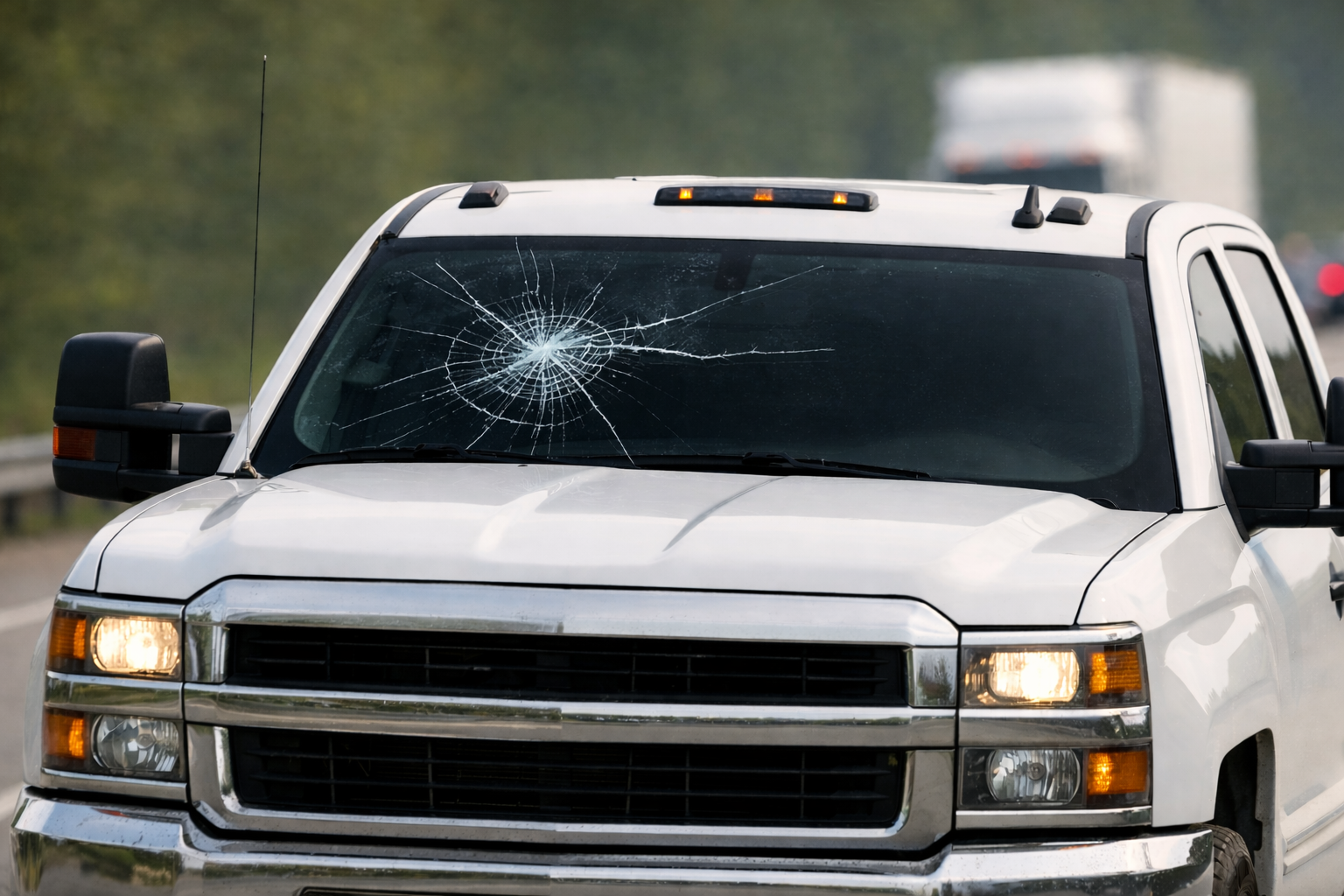
Driving with a broken windshield might feel like something you can put off for a while, especially if it’s “just a crack.” But the truth is, a damaged windshield is far more than a cosmetic issue. It’s a serious safety concern that can put you, your passengers, and other drivers at risk. Here’s why ignoring that crack or chip can be a dangerous decision.
First and foremost, a broken windshield compromises visibility. Even small cracks or chips can distort your view of the road, especially when sunlight, headlights, or rain hit the glass at certain angles. That split-second visual distortion can delay your reaction time, making it harder to spot hazards like pedestrians, debris, or sudden stops in traffic. When visibility is reduced, the likelihood of an accident goes up.
Beyond visibility, the windshield plays a critical structural role in your vehicle and contributes significantly to the car’s overall strength. In a collision, the windshield helps support the roof and prevents it from caving in. If the glass is cracked or weakened, it may not hold up during a rollover or severe impact, increasing the risk of serious injury.
A damaged windshield also affects airbag performance. In many vehicles, the passenger-side airbag relies on the windshield to deploy correctly. During a crash, the airbag inflates and uses the windshield as a backstop to cushion occupants. If the windshield is cracked or improperly bonded, it may pop out or shatter, causing the airbag to malfunction. That can reduce its effectiveness—or worse, cause additional injuries.
There’s also the risk of the damage spreading without warning. Temperature changes, road vibrations, potholes, and even closing your car door too hard can cause a small chip to suddenly turn into a long crack. What might have been a simple repair can quickly become a full windshield replacement.
Legal and financial consequences are another factor to consider. In many areas, driving with a cracked windshield that obstructs the driver’s view can result in traffic citations or failed vehicle inspections. If you’re involved in an accident, a damaged windshield could also complicate insurance claims, especially if it’s determined that the defect contributed to the incident.
In short, a broken windshield isn’t something to ignore or “wait out.” It’s a vital safety component of your vehicle, and even minor damage can have major consequences. Addressing windshield issues early isn’t just smart—it’s essential for safe driving.