
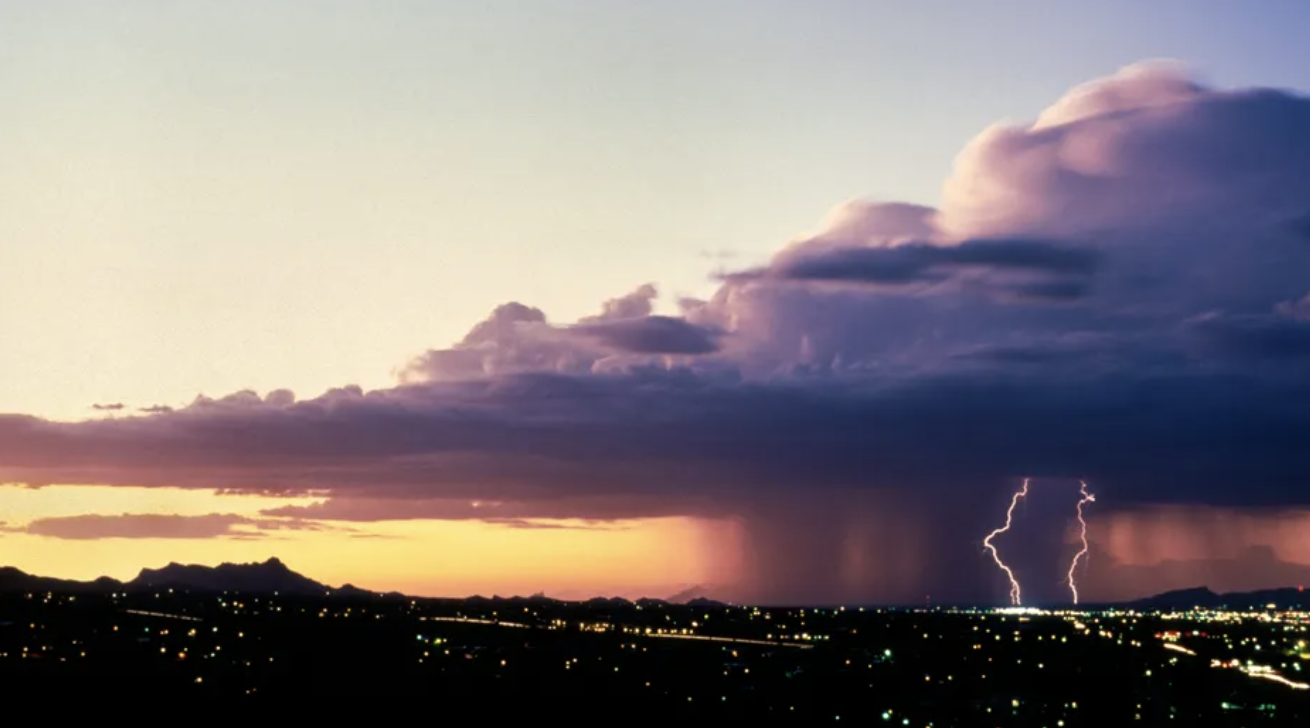
Experts are warning that a “super El Niño” is likely to influence Southern Arizona this summer. Here’s what that means and what the region might expect.
What is El Niño? El Niño is the warm phase of the El Niño–Southern Oscillation (ENSO). It occurs when sea-surface temperatures in the central and eastern tropical Pacific become significantly warmer than average, shifting atmospheric circulation and the main storm tracks. These changes alter precipitation and temperature patterns worldwide: the Southern United States and Northern Mexico typically see wetter winters and shifts in seasonal weather patterns. A “super El Niño” describes an especially strong event (like the 1982–83, 1997–98, and 2015–16 episodes) that produces larger-than-normal climate impacts.
How El Niño can affect Southern Arizona and Northern Mexico
- Winter: Strong El Niños historically bring a more active Pacific storm track across the Southwest, increasing the chance of above-average winter precipitation—rain and mountain snowfall—reducing drought stress but raising flood risk in low-lying areas.
- Summer monsoon: Effects on the North American monsoon are less consistent. Some strong El Niños have weakened monsoon flow, while others have coincided with episodes of enhanced tropical moisture and intense convective storms. Local outcomes depend on the timing and interaction with other atmospheric patterns.
- Tropical cyclones: El Niño tends to suppress Atlantic hurricane formation but can enhance tropical cyclone activity in the eastern Pacific, sometimes increasing the likelihood of remnant moisture or storms tracking northward into Sonora and southern Arizona.
Historical examples
- 1982–83: One of the strongest 20th-century El Niños; the Southwest experienced unusually heavy winter rains and widespread hydrologic impacts, with flooding in parts of Arizona and northern Mexico.
- 1997–98: A powerful event that produced very wet winters across the southern U.S., including elevated precipitation and mountain snow in Arizona; associated flooding and reservoir inflows followed.
- 2015–16: Another strong El Niño that brought wetter-than-average conditions to parts of the Southwest in winter and complex monsoon responses, including localized heavy summer storms.
If you live in Southern Arizona, expect wetter winter prospects, heightened flood awareness, and an uncertain but active monsoon season. Residents should prepare for variable outcomes—improved drought conditions in some areas but elevated flood and storm risks in others.