
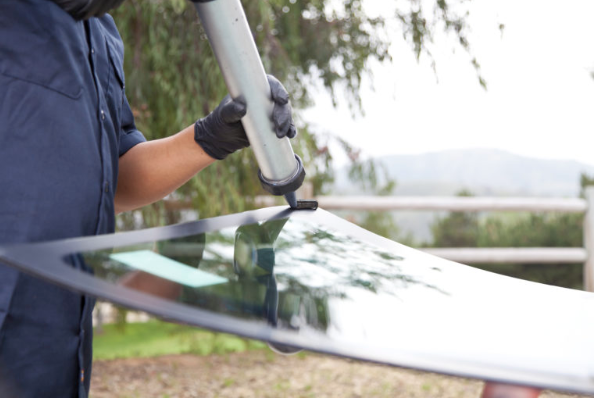
Weather plays a critical role in the quality and longevity of a windshield installation. Technicians, vehicle owners, and fleet managers should understand how temperature, humidity, wind, and especially rain or water exposure influence the adhesive bonding process. Proper windshield installation depends environmental conditions that affect the urethane sealant used to bond glass to the vehicle frame.
Urethane adhesives cure through a chemical reaction that is sensitive to moisture and temperature. Most modern auto glass urethanes are moisture-cure formulations: they require a certain level of ambient moisture to begin and complete curing. Temperature affects the reaction speed—warmer temperatures accelerate curing, while colder temperatures slow it dramatically. Manufacturers specify optimal temperature ranges are roughly 40°F to 95°F, and installers should follow those guidelines to ensure the bond reaches structural strength within the expected time.
Humidity is a double-edged sword. Because urethane needs moisture to cure, extremely dry conditions can delay the cure time, leaving the adhesive tacky and under-strength for longer. Conversely, high humidity generally speeds up the urethane’s surface cure; however, excessive humidity paired with condensation or direct water contact can compromise bonding quality if moisture interferes before the adhesive sets.
Rain and water present some of the most significant challenges, since freshly applied urethane must bond to a clean, dry flange (the pinch-weld or glass channel). If rain wets the flange either before installation or during the initial curing window, water can form a barrier between the adhesive and the metal or painted surface. This contamination prevents intimate contact, causing poor adhesion, voids, or localized weak points. Even if the urethane cures on the surface, trapped moisture can lead to adhesive failure over time, causing leaks, wind noise, or structural defects.
Water can also dilute or wash away primers and surface treatments used to promote adhesion. Many installations require a specific primer applied to the glass and/or frame; if rain occurs before the primer has fully flashed (dried appropriately), the primer’s effectiveness can be reduced. Similarly, if a vehicle was recently washed and not allowed to fully dry, residual moisture in seams or crevices can interfere with bonding.
Technicians mitigate rain-related risks by following these practices: checking weather forecasts, choosing sheltered or indoor workspaces, and using temporary covers. If installation must proceed in light rain, they ensure the flange and glass are fully dried with clean, lint-free towels and, when available, use heat or air drying.
Curing time considerations matter for vehicle use as well. Urethane manufacturers publish safe drive-away times (SDAT) and minimum handling times at varied temperatures and humidity levels. Rain immediately after installation can extend the required SDAT because moisture can slow through-cure in colder conditions or disturb the adhesive before it attains sufficient strength. For safety, vehicle owners are advised to avoid car washes and high-speed travel for at least 48 hours after installation. Car washes are specifically important to avoid during the curing process because the velocity of the pressurized water is particularly invasive to the urethane curing process.
In summary, weather significantly influences windshield installations. Rain and water are particularly problematic because they can contaminate bonding surfaces and interfere with primers, leading to weak seals and potential leaks. Proper planning—working indoors when possible, using drying techniques, and adhering to manufacturer cure-time tables—ensures reliable, safe installations even during inclement weather.